Programme summary
National programme
A coordinated UK effort linking materials, modelling, devices and translation.
AI energy challenge
Ultra-low-energy hardware to support sustainable growth in AI computing.
2D Materials
Atomically thin platforms including graphene and engineered heterostructures.
Why now?
AI-driven electricity demand is rising rapidly; energy-per-operation is now a primary constraint.
Why 2D?
Atomically thin materials unlock electronic behaviour beyond conventional semiconductors.
Why NEED2D?
A coherent programme linking materials, modelling, devices, and translation.



A Global research programme
Research team
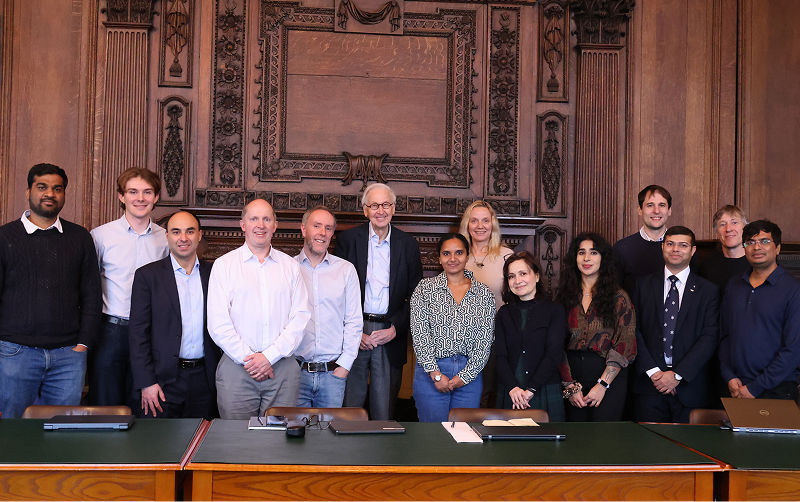
Our world-class research team will focus on innovative approaches to low-energy consumption, high-speed electronics, which will enable the UK in making significant advancements in these areas. We will achieve this ambitious aim by bringing together key researchers from academia and industry to translate our scientific knowledge and expertise in 2D graphene electronic devices into new prototype devices made from a range of scalable 2DSEM on different platforms, including silicon-compatible platforms, and pulling them through to UK manufacturing industry.
State of the art facilities
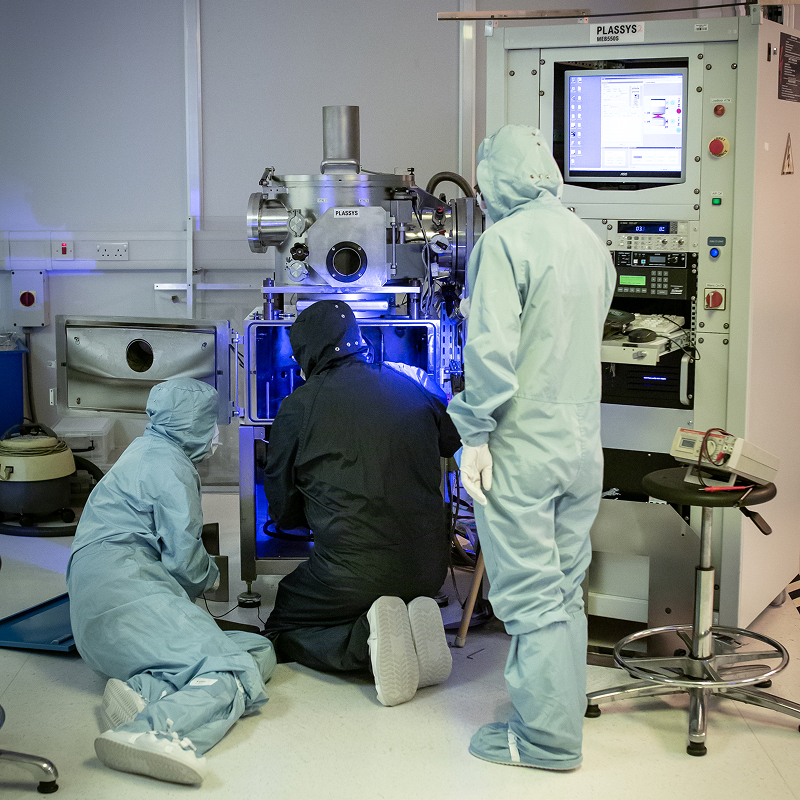
Queen Mary University of London, University of Nottingham and University of Glagow will provide access to their extensive range of facilities. The different teams at these partner universities will use and/or develop state-of-the-art facilities for growth (MOCVD, CVD and MBE), computation, advanced characterization (e.g. EPI2SEM and others, such as the ePSIC/SuperStem national facilities of the EPSRC) and device development at the James Watt Nanofabrication Centre (University of Glasgow).
In addition, we have arranged access to the EPSRC electron-microscope facilities at ePSIC at Diamond and to the SuperSTEM at Daresbury (funded separately by the EPSRC). We also have access to other atomic-resolution electron microscopes at Oxford, Cambridge and Manchester. Experiments will be complemented by access to the world-leading facilities of the EMFL (European Magnetic Field Laboratory) and FELIX (Free Electron Lasers for Infrared eXperiments) for IR-THz optical spectroscopy and high magnetic field research.
Research partners
In collaboration with our research partners, including industrial partners, our research team will transform the UK’s semiconductor landscape by establishing a comprehensive UK supply chain, covering the basic research, development, and prototype production of some key semiconductor electronic devices which can be manufactured by UK industry, ensuring the UK's pivotal role in the 2D semiconductor revolution